

Open mind for a different view
And nothing else matters
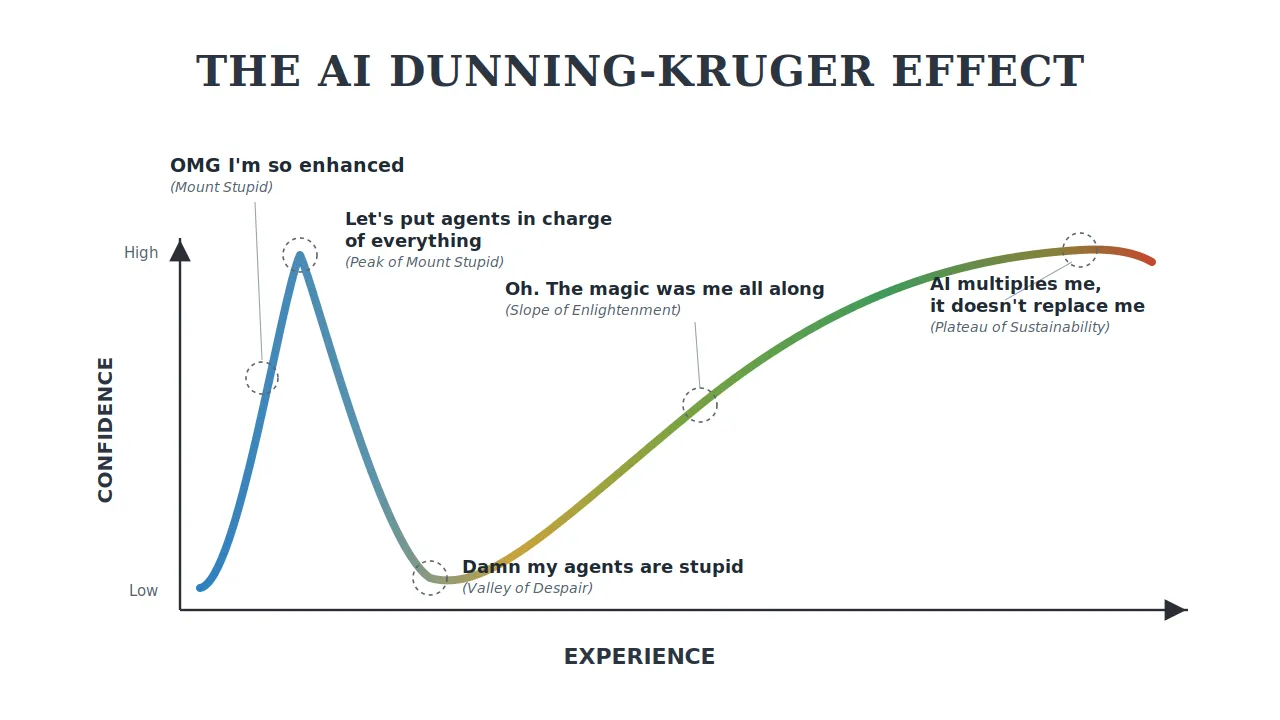
The Amateur Polymath
AI has been one of the best things to happen to my working life in a long time, and I mean that in the fullest way I can. I use it every day, and it has multiplied me so thoroughly that the small words feel wrong for it. The closest I can get is that it works like more than an extra pair of hands, something nearer to a set of new senses that I didn’t have before and can no longer picture working without.
Most of what changed started in conversation, and it runs together in a way I find hard to pull apart. Some of it is study, plain curiosity about subjects that sit next to mine without ever quite being mine. Going deep on one of those used to mean finding the time, the right book, or a patient person to answer the basic questions, and usually none of that came together, so the curiosity just stayed a note in a list somewhere. Now I can take something I only half understand and work my way into it by asking, and then asking again about the answer, following the reasoning down whatever hole it opens until the thing sits straight in my head. Some of it runs the other way, beginning from something barely formed in my own head rather than from a subject at all, not a plan and not even a clear question, just a vague aspiration or an intuition I can’t yet put a name to, a half-thought you normally let slip because chasing it seems to cost more than it could return. In practice the two are really one thing. The reading sparks an intuition, the intuition sends me back to read more, and either way, talking it through brings the idea into focus, like a mirror that shows me what I was already reaching for. Those detours almost never end where I expect, since I set out after one small thing and come out three questions later somewhere I had not planned to be, holding an idea I would never have reached from the front door, and a fair number of the things I care about, including more than a few I went on to build, began their life as exactly that kind of rabbit hole, followed for no better reason than that I at last had somewhere to think out loud that would push back on me.
That pushing back is something I had to build. The models arrive wanting to please you, so left to their defaults they agree, they soften, they round everything you say into a yes, and I spent real time working that reflex out of how the two of us operate together. I taught mine, if that is the right word for it, to stop being agreeable on command, to go looking for the holes in whatever I had just claimed, and to take the opposite side of my own position and argue it as hard as it deserves, so that I could see the angle I had been standing too close to notice. Sometimes that treatment makes the idea stronger, and sometimes it dismantles it and spares me from spending a month in love with something that was never going to work, which over time has turned the whole exchange into something closer to sparring than to dictation.

Then there is the plainer matter of everything I have simply been able to make. I have put professional-looking sites online in a matter of hours, the sort of thing I would never have had the patience to build by hand and, if I am honest with myself, would never even have begun. I took a whole product from a rough idea through to a working MVP, and to make its case I had to step off my own ground, the technical side where I am comfortable, and pick up the language of the business instead, a way of framing things and a vocabulary that were new to me and that I didn’t know. I brought a full team onto it in a disciplined, spec-driven way, using the same kind of tooling, so that it was never only me improvising on my own in a corner. I did marketing I have no real right to be capable of, generating videos through code with libraries I had never heard of before, let alone touched, and arriving at results I could not have reached the older way, because the learning curve on the professional tools was always going to be too steep for my goals, and alongside that came slides, sales documents, enablement material, and both technical and commercial documentation. All told, it is work that would have taken me many years by any ordinary reckoning, and in truth it would never have happened at all, because on my own I would never have begun it.

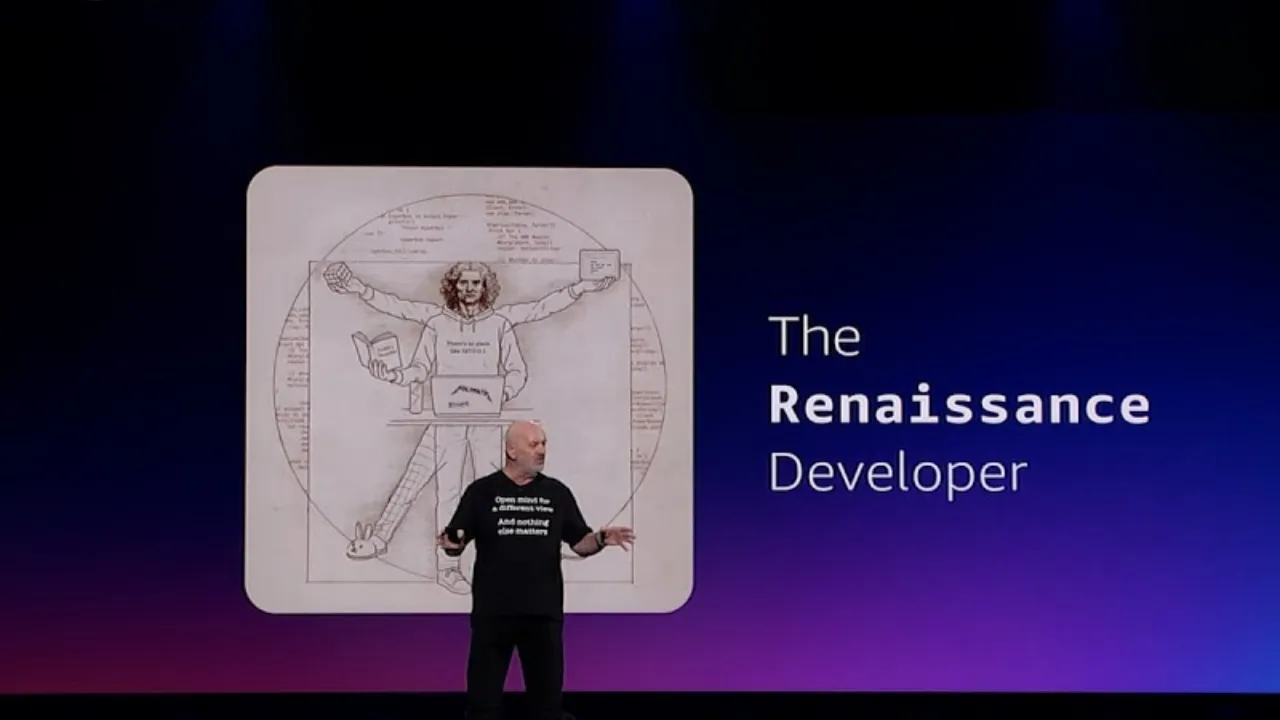
Someone put a name to all of this at the end of last year. I was in the room in Las Vegas for Werner Vogels’ final re:Invent keynote, and I did not expect it to move me the way it did. He spent the hour on us, on what a developer becomes once the tools take on more of the work, and he reached all the way back to the Renaissance to say it: a time when curiosity drove invention, when art and science sat in the same conversation, when new tools like the telescope and the printing press changed what a single person could do. He held up Leonardo da Vinci as the polymath who moved between anatomy and water and flight and painting, and hearing him build the whole thing out of my own country’s history landed somewhere personal.
His answer to the question everyone asks, whether AI will make us obsolete, was no, not if you evolve. He had a name for what we grow into, the Renaissance Developer, and a short list of what it takes: staying curious, thinking in systems, communicating with precision, and above all owning the work. The work is yours, he said, not the tools; you build it, you own it. That last line is the whole of what I have been describing here, because the value stays with the person who owns the outcome. If you work in this field, it is worth watching.
I was not the only one who came out of that period changed. Matt Shumer’s “Something Big Is Happening” reached me around the same time, like a letter from someone who had been feeling the exact thing I had. I read it and thought: yes, this is the excitement I had been carrying around, the sensation of standing in the front row of something that is arriving and that has, in more than one sense, already arrived. There is no pitch anywhere in it. He was simply describing the view from more or less where I was already standing, and there is a particular relief in learning you are not the only one who has been seeing it.
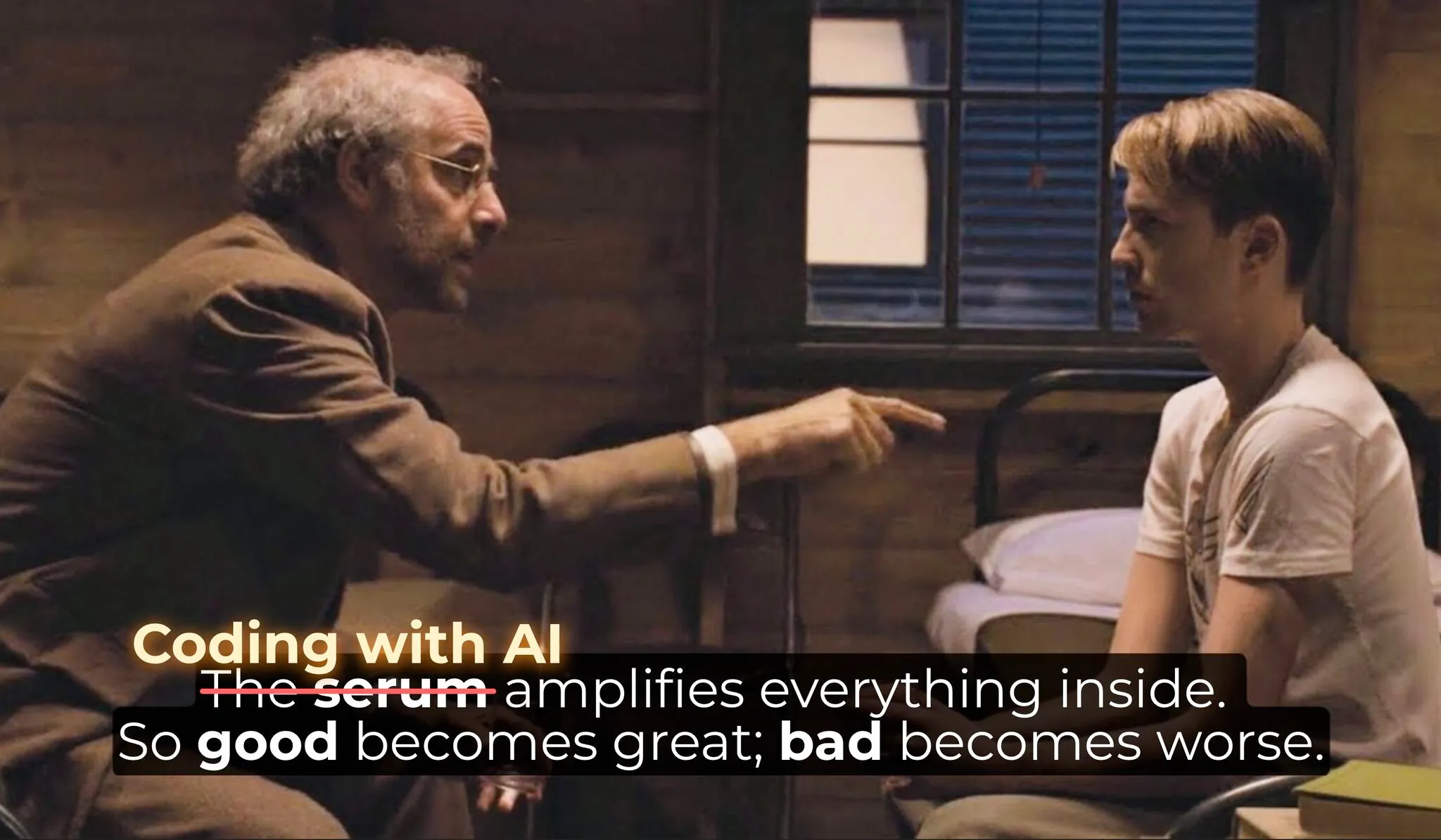
I do not want any of this to read as blind cheerleading. AI amplifies; it does not improve everyone who picks it up. The worst Terraform code I have ever read was generated by AI in the hands of someone who had no real idea what they were building, never suspected it, came away convinced they were good at it, and left behind a mess we have been paying for ever since. AI is basically like the serum in Captain America, the one that amplifies whatever is already inside.
The Return of Wonder
From there, the next thought followed almost on its own: if AI could do this much for a single person working alone, then the obvious move was to build agents that were no longer only for my own use at my own desk, but could live inside real products of the enterprise kind and carry out work on their own.
None of which was some clever idea of my own. The whole industry is pushing the same way, toward a future where the agent handles the whole job on its own and the human is left to write the brief and pay the invoice. Every major platform now ships a framework for building this kind of agent, every conference has grown a track around it, and the money flows in the same direction, so that building agents to run without me sitting over them was simply the obvious next step, the door the whole field had been holding open, and I walked through it like everyone else.
Building those things (or trying to) was great fun, in a way work had not been for a long stretch, and I will come to the separate question of whether it was useful. After enough years in this field you find yourself doing a great deal of the job on a kind of autopilot, where the problems in front of you rhyme with problems you already solved long before, and somewhere along the way you stop feeling the thing you felt right at the beginning, that small charge of working out something you did not understand. Building agents handed that feeling back to me.
Most of what I was learning was how you try to fence an agent in, the machinery you put around it so that it cannot wander off and do the wrong thing. I read a great deal and broke a great deal, and I spent long stretches thinking about who an agent should be allowed to be, what it may touch and when, and how you would ever prove after the fact what it had done, all of it new to me, and after so many years, feeling like a beginner again was a gift I had not expected to get.
The Right to Be Wrong, Cheaply
For all the good I have just described, a growing worry has been with me for a while now.
The more I built, the clearer it got that there are whole classes of problem that AI, at least the AI we have today, is not ready to carry on its own, and I reached that from the inside rather than from any wish to be contrary.
It always comes down to the same thing. When AI multiplies me, the reason it does is that I am the human standing in the loop. I am the one steering it, judging what comes back, correcting on the fly, deciding the architecture, and discarding whatever does not fit, so that the judgment holding the whole thing together is mine, and the cost of any particular mistake stays low for the plain reason that I catch it a moment after it happens. Used that way, as a tool held in my own hand, it pays off enormously. And even when I do not watch it step by step, the same thing holds. I hand Kiro a task, walk off for an afternoon, and come back to whatever it has built. If it went sideways, the worst case is a handful of tokens and an afternoon gone, and I throw it out and start over. Even getting it completely wrong costs me almost nothing here.
When a mistake is cheap, no one has to catch every one: at my desk I throw out a bad afternoon, and at scale you simply tolerate a small rate of them. When a mistake is expensive, every one has to be caught before it lands, and the thing doing the catching is a human, and that does not scale. It is really one condition, the cost of a mistake, and the human in the loop is what the expensive side forces on you. The whole argument turns on how reliable the machine has to get before that human is no longer needed.
The very place AI works for me, where a task is hard to pin down in rules and a mistake is cheap, is also where it does its most useful work of all. There is a large set of jobs where writing the rules by hand would cost far more than tolerating a few mistakes, because the rules are too many, or keep changing, or cannot really be written at all: sorting ten thousand tickets written in plain language, turning a vague request into a query that works, taking the first pass over a mountain of documents no one would ever read by hand. On those you do not write the code, because turning every rule of human language into code is the problem the field never solved by hand, so AI is the only thing that stands up.
The reason anyone pushes AI into the enterprise is, well, the money, and it pulls from both ends. The companies selling AI have spent enormous sums and need enterprise revenue on the same scale to make their own numbers work. On the other end, whoever signs the cheque wants a return they can measure, and the return from me saving an afternoon here and there, while I sit and read the output, is both small and hard to put a number on. Supervised use is real, but it has a ceiling: it makes one person faster, it still needs that person, and every hour of watching is a cost of its own. Gains like that shave a little off each salary; they never remove one. The return large enough to justify the spend, the kind that lets you cut the headcount rather than speed it up, arrives only once the human is out of the loop.
That is what pulls both sides, the AI companies and the enterprises, toward the same thing: agents that run on their own, with no one in the loop, at a scale no team could match. But the enterprises with that kind of money sit, more often than not, in regulated sectors, where a wrong result is costly and a mistake cannot be made cheap. Put it together and the enterprise, as things stand, needs the hardest combination there is: an agent deciding on its own, at volume, in a place where every mistake stays expensive.
Agents, at least at the time of writing, behave like very fast interns who produce a great deal and get a fair amount of it wrong, which is fine for as long as someone experienced is still reading everything before it leaves the building, and stops being fine the instant you drop them somewhere the stakes are high, in finance or healthcare or legal work or public administration.
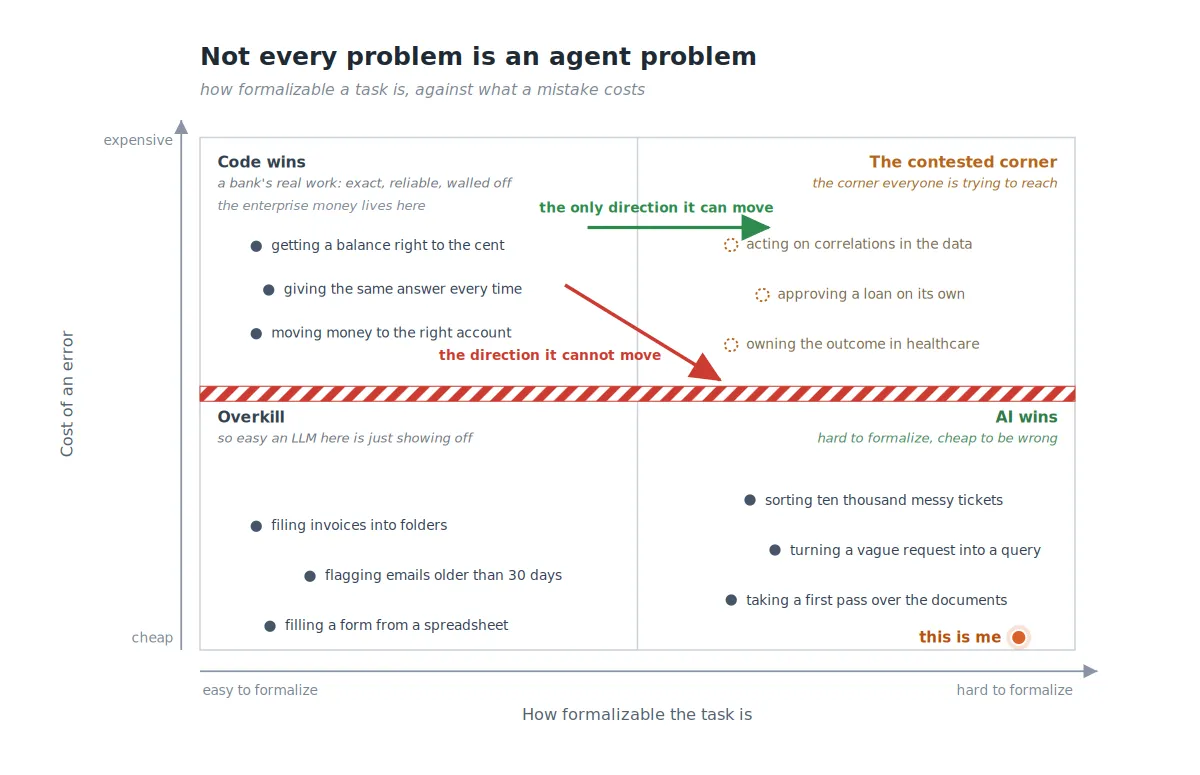
It all sorts along two axes: how formalizable a task is, and how much a mistake on it costs. When a task is hard to formalize and an error is cheap, AI tends to win outright. When a task is easy to formalize and an error is expensive, plain code wins, and that is where an enterprise’s real work already sits, the exact, reliable, isolated operations it runs every day. The hard corner is the one where a task is both hard to formalize and expensive to get wrong at the same time. A regulated business cannot get out of it by lowering the stakes, because the cost of being wrong is the one thing a bank or a hospital cannot lower. That leaves the hard corner as the only place it can put AI to work, and it is exactly where the industry keeps dragging it by force. That corner is full of use cases that would matter enormously, and not one of them works yet without a human standing in it.
Two walls stand in the way, and the first is cost at scale. I keep thinking about a friend of mine who works on online games fraud. His team compared an AI approach with the plain system they already ran. Even if you grant the AI the very same accuracy, which today is already generous, it falls apart on scale: it costs about 1-3 dollars for every check, and they run something like hundreds of thousands checks a day, while the old system costs around 5-6 thousand dollars a month for all of it. Nobody had to finish the sum to see where it went, and they kept the boring one. For anything you can already formalize, the bill at real volume settles it before capability ever gets a say. That is today’s arithmetic, though, and of all the walls this is the one I trust least, since inference keeps getting cheaper and the number will not hold forever. For now it holds, and for now it has been enough to stop the thing cold.
The second wall is the problems themselves. The use cases that would make the hard corner worth the money are, almost every one of them, problems the field has been stuck on for decades. The one people reach for most often is an agent that goes through an ocean of data, finds the correlations no person would have the hours to chase, and acts on them, which walks straight into data dredging: over enough data you always turn up strong correlations by pure chance, and correlation was never causation, so an agent with no ground truth ends up acting on noise. The same holds for common sense, the everyday knowledge people take for granted that machines still cannot be trusted to get right, and for the frame problem, working out what an action changes and what it leaves untouched in a messy, open world. These are older, deeper problems the field has chipped at for a very long time, and any one of them, truly solved, would be worth a fortune.
You can see this trajectory, or more honestly the wish behind it, in the agents being sold as ready to run at scale: with AWS FinOps Agent you can check your cloud bill, and when a cost spike fires it correlates the change against the audit trail and names the likely cause. The AWS DevOps Agent does the same for outages, pulling signals from a dozen tools into a probable root cause. Both are the correlate-and-act pattern, and both are kept, for now, from acting on their own: the FinOps one only reads and hands you a summary (and its ability to do it depends heavily on your own prompt), and the DevOps one drafts a fix and then waits for a person to approve it. Even Amazon, building its flagship autonomous agents, will not let them close the loop by themselves where closing it wrong is expensive. The DevOps agent is metered at around fifty cents for every minute it spends thinking, running in parallel around the clock, which is that same cost problem over again, at least at today’s prices.
Meanwhile, in the attempt to make a costly and unreliable agent palatable to an enterprise, everyone is wrapping it in a whole apparatus of control. There are harnesses to keep an agent on task instead of drifting, gateways that sit between it and the systems it can reach so nothing gets through without passing a checkpoint, interceptors that read what it is about to do and stop it first, policy layers deciding request by request what it may touch, guardrails against prompt injection, defenses against the confused deputy problem where something with real privileges is talked into using them for whoever got to it, and governance over all of it so that when something goes wrong you can at least reconstruct who did what. Every one of these exists for the same reason, and together they build a cage around the agent. None of that is unusual for a bank or a hospital, which wrap everything they run in controls, but most of this apparatus exists to stop the agent from acting on its own, the one thing it is being sold as ready to do.
To summarize: the hype works by taking the real wins from the easy corner (the assistant that helps you write and search and think) and selling them as though they carried straight across into the hard one (autonomous agents wired into systems where the cost of failure is real). The useful part of all this is real, and the move I object to is the dragging of that success onto ground where it does not yet hold, done for the fairly transparent reason that the ground in question is where the enterprise money happens to live.
Obviously, it is not only me. The BIS, the bank that the central banks themselves answer to, published a report mostly concerned with the financing behind all this. Companies running pilots report real gains at the level of the individual employee while the projects pushed into production at scale show almost none. That is the same disconnect I had been living, only stated as an aggregate across the whole economy, and it says that the value is turning up wherever a human is still standing in the loop and thinning out wherever the human was expected to step aside. The report’s bigger worry is the money itself, how much is being borrowed and spent on AI while the returns stay thin. The fear underneath all of it is that the bubble bursts before the payoff all this spending is betting on ever arrives, and the money runs out first.
The Benefit of the Doubt
The one thing that could turn all of this on its head is the self-improvement loop. If the models really do keep getting better at a compounding rate, and the AI labs really are using them to help build the next ones, then the wall I have been describing, the wall built out of the cost of error and the difficulty of checking, is not fixed in place and can move. A model good enough that you no longer feel any need to check its output would erase the whole distinction I have been drawing, since the only reason the human was ever load bearing is that the output needed checking in the first place. I do not believe we are there yet, and I have still not met an agent I would be willing to let run unwatched over anything that truly matters to me, though I am aware that saying I have not seen such a thing is a far smaller claim than saying it cannot exist, and I would rather not let the first stand in for the second.
Which leaves me somewhere that refuses to resolve into anything tidy, and that is very likely the most truthful place to be sitting. I am not reaching for the apocalypse, and I have no appetite at all for being the person who mistakes standing against the new thing for wisdom, since that posture tends to age worse than almost any other. Charity Majors described this well: the conversation has hardened into two camps, enthusiasts and skeptics, who have stopped listening to each other and argue past caricatures, even though neither side is really wrong. That is a good part of why I wanted to lay the reasoning out in full, slowly, instead of picking a flag. The excitement I felt is still with me and I think it is earned, because AI really multiplies me and has grown new senses, and it will go on doing exactly that everywhere I remain inside the loop. Everything I am unsure about fits into one narrow place, the place the loop is meant to close without me. Whether that place opens up to these systems is something I do not know yet, and I am content to leave it open. After all the reading and all the building, what I am left with is less a verdict than a way of seeing: two axes, how formalizable a task is against what a mistake costs. That lens is the part I would hand to someone else, and it leaves me a long way from both the doom and the hype.
Comments ·
Loading comments…
Sign in to leave a comment.